2 hr 30 min
Rome: Colosseum, Palatine Hill & Roman Forum Guided Tour
- Expert local guide
- Small group
- Skip-the-line access
- Free cancellation
Colosseum Underground And Roman Forum Tour — Hypogeum & Palatine Access
Beneath the arena floor, above the ruins of empire.
Compare fares, pick the fit — all bookings are mobile-voucher and eligible for free cancellation where shown.
2 hr 30 min
3 hr
3 hr
Choosing a colosseum underground and roman forum tour ticket mostly comes down to one question: do you want to walk through the hypogeum tunnels, or is seeing the arena and forum from ground level enough. Rome landmarks like this reward early booking, and the underground tier is the tightest of all to secure.
| Standard 24-Hour Entry (Arena view from stands) |
Top pick Full Experience Underground & Arena (Hypogeum access) |
Full Experience Attic (Upper-level access) | |
|---|---|---|---|
| Areas included | Levels 1–2, arena view from stands | Arena floor + underground tunnels | Arena floor + attic upper levels |
| Roman Forum & Palatine Hill access | ✓ within 24 hours | ✓ within 2 days | ✓ within 2 days |
| Advance booking difficulty | Low — holds for days to weeks | Very high — sells out in 60–120 seconds | Very high — 8-person slot cap |
| Guided component | Self-guided, free audio app | Licensed guide required, fee separate | Licensed guide required, fee separate |
| Typical price tier | 18 EUR (standard ticket, includes Roman Forum and Palatine Hill) | Higher — premium underground pricing | Higher — premium attic pricing |
| Best for | Budget-minded, flexible-schedule visitors | First-timers wanting the full hypogeum experience | Visitors prioritizing upper-tier views over tunnels |
| See tickets & prices |
Verdict: First-timers set on seeing the hypogeum should book the colosseum underground and roman forum tour tickets the moment they're released, while anyone wanting a flexible, no-stress visit can rely on the Standard tier and still reach the Roman Forum and Palatine Hill.
Worth it for history-focused visitors, optional for others
The standard ticket runs 18 EUR and already bundles the Roman Forum and Palatine Hill, so a colosseum underground and roman forum tour is an add-on cost layered onto that base. What the upgrade buys is arena-floor and hypogeum access: you stand at the level where gladiators waited and animals were hoisted through trap doors, not just gaze down from the tiers. For first-timers, the guided route also cuts booking friction and orients you across sprawling ancient landmarks in one pass. History-minded repeat visitors get the sharper payoff, since the substructures reward context they already carry. Casual sightseers on a tight budget can skip the underground layer and still see the amphitheatre, Forum, and Palatine on the base fare. Book the roma colosseo guided experience early; slots for the restricted lower levels sell out fast and rarely open last-minute.
Bottom line: If standing on the arena floor matters to you, the colosseum underground and roman forum tour earns its premium; otherwise the 18 EUR base ticket is plenty.
Hand-picked experiences loved by thousands of travelers
2.5 – 3 hours
Walk the gladiators' path, explore ancient ruins, and soak up panoramic Rome views on one epic 3-in-1 journey.
1.5 – 3 hours
Go beneath the arena floor, walk gladiator tunnels, then explore the Roman Forum at your own pace.
3 – 3.5 hours
Free Cancellation
Step beneath the arena and into ancient Rome on a private 3-hour journey through the Colosseum and Forum.
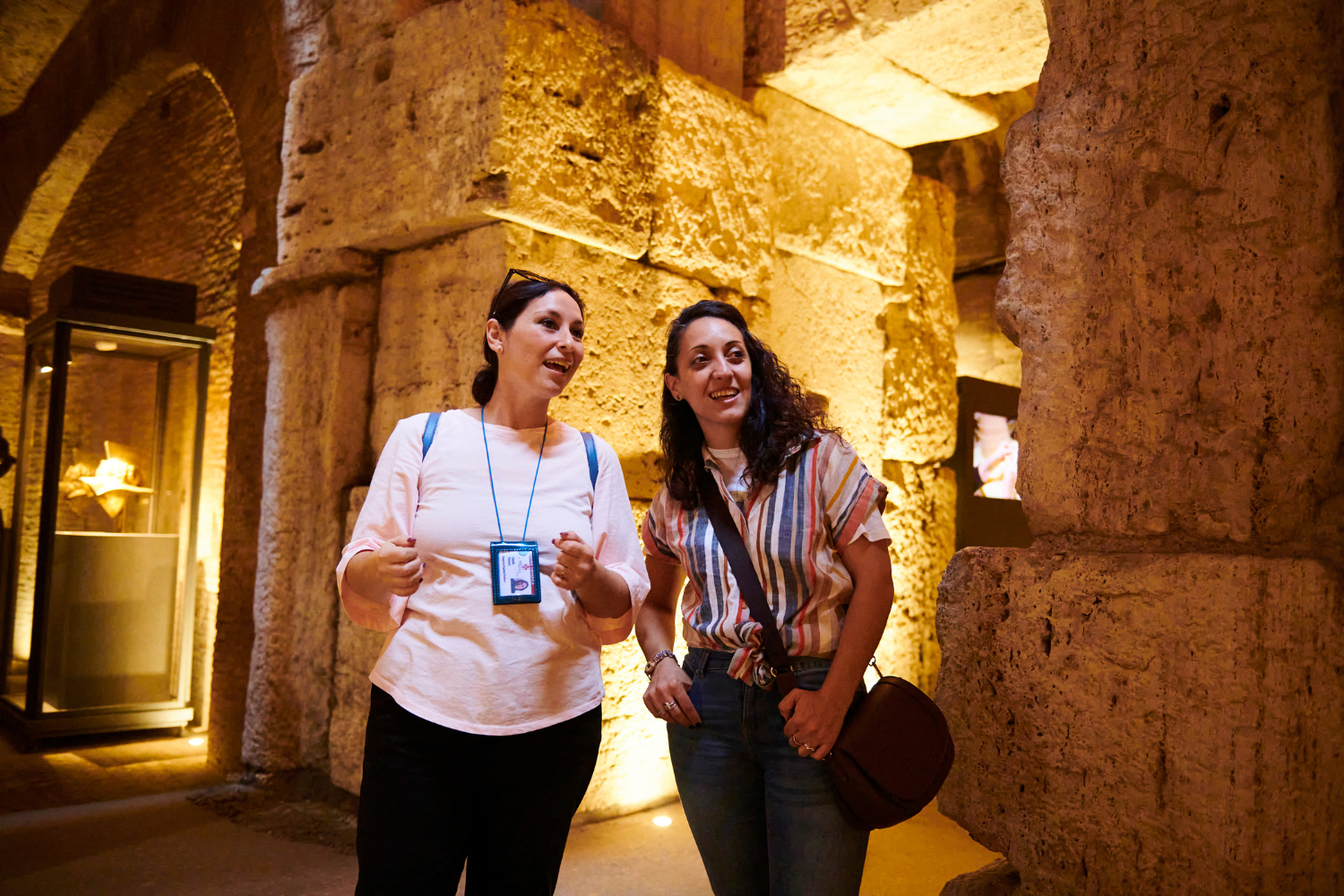
Guide meets the group near the Colosseum entrance to verify tickets and give a brief safety and route overview before descending.
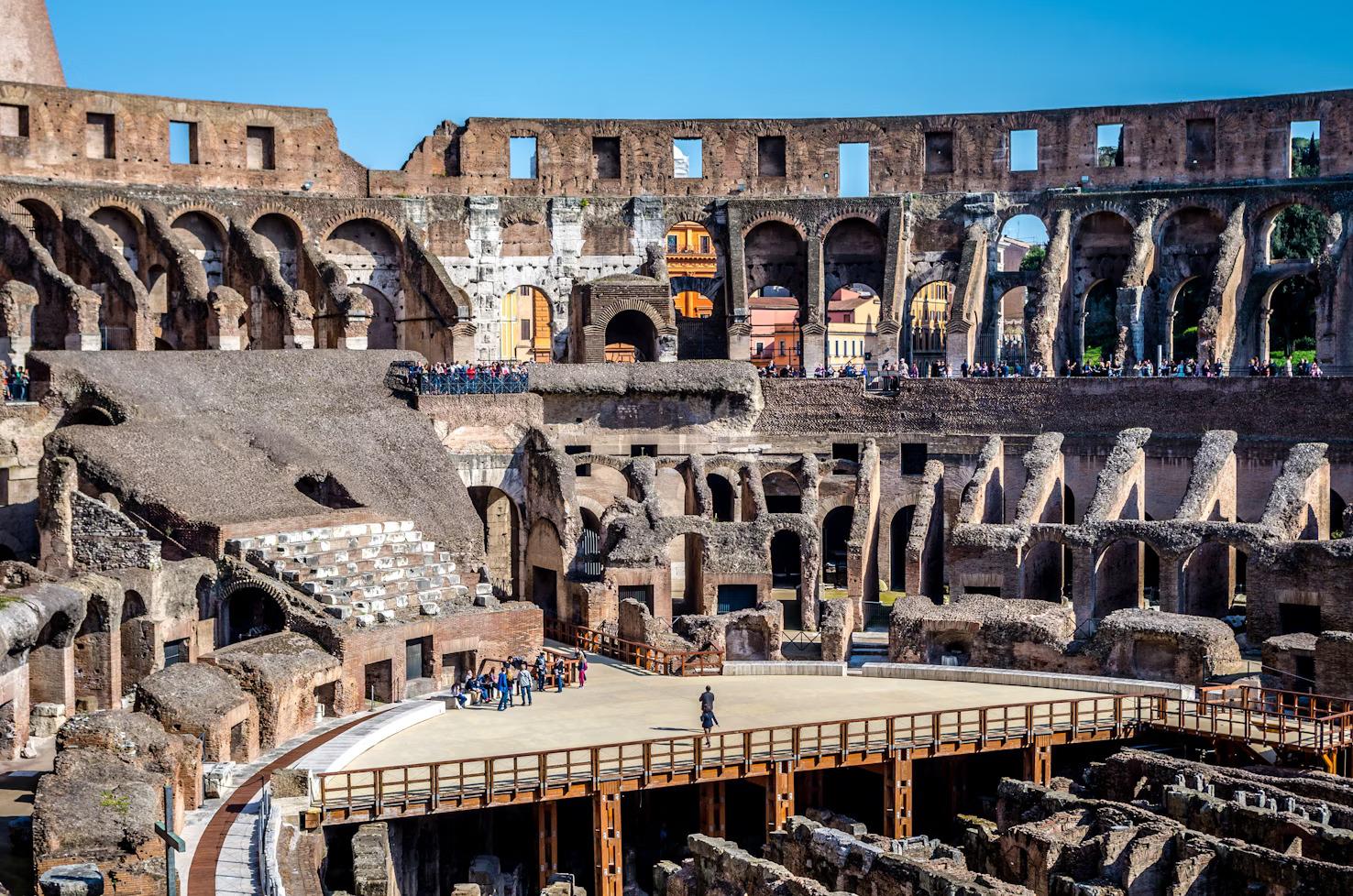
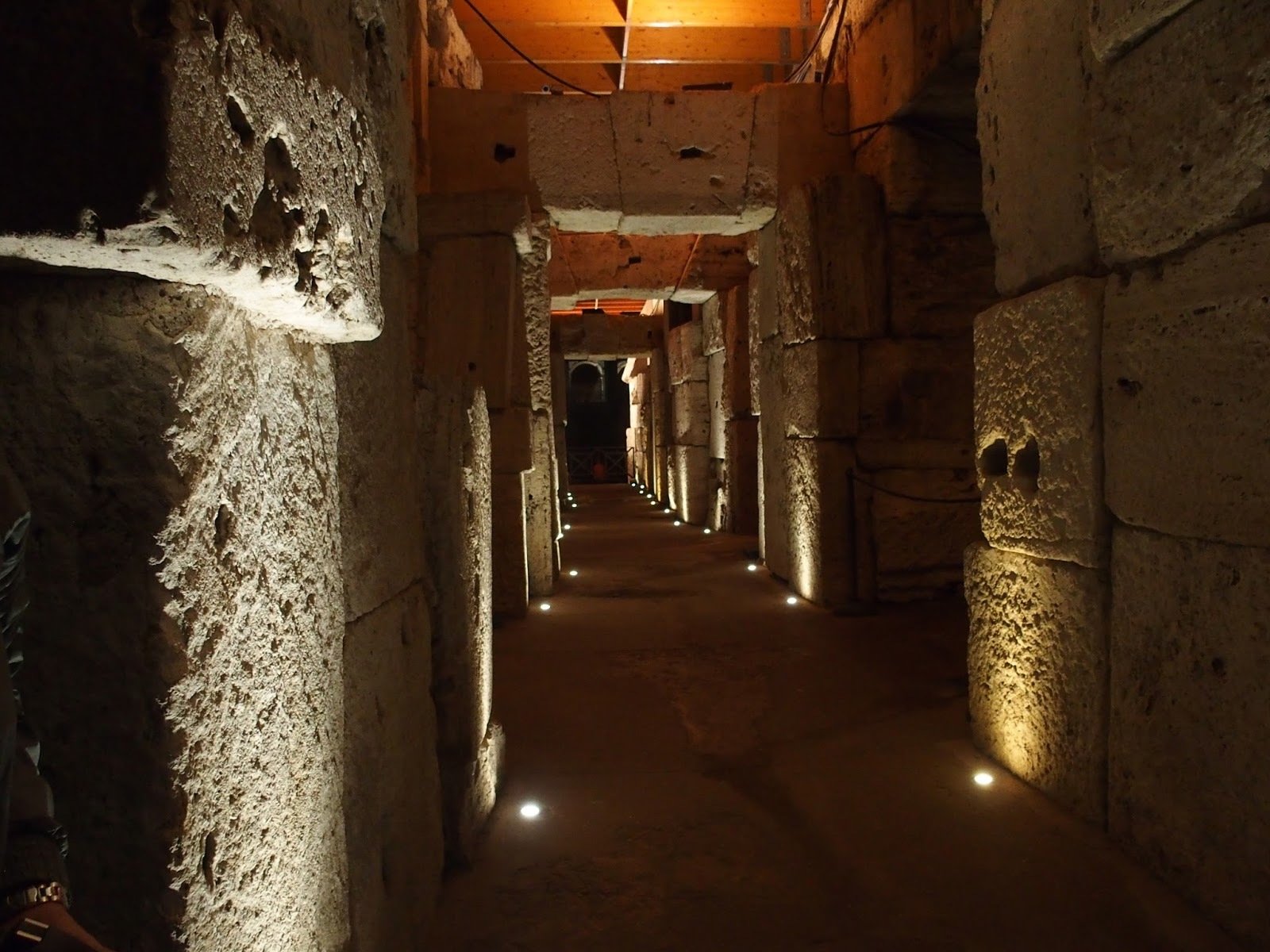
Walk through the underground corridors where gladiators and animals once waited, viewing the trapdoor and pulley mechanisms beneath the arena floor.
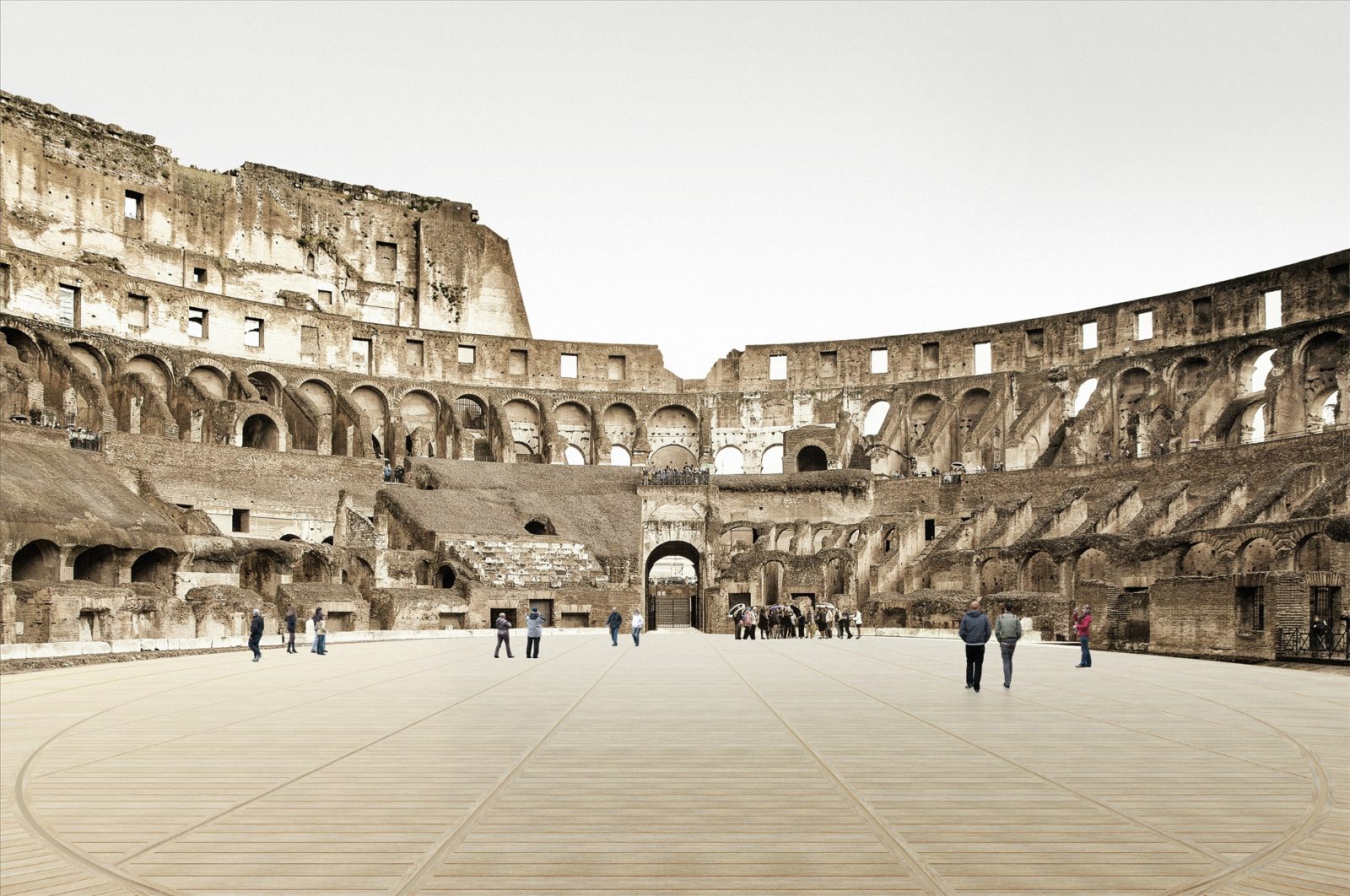
Step onto the reconstructed arena floor section for a direct sightline across the amphitheater's tiers.
Climb to the upper seating levels for a wide view over the amphitheater and surrounding Roman Forum.
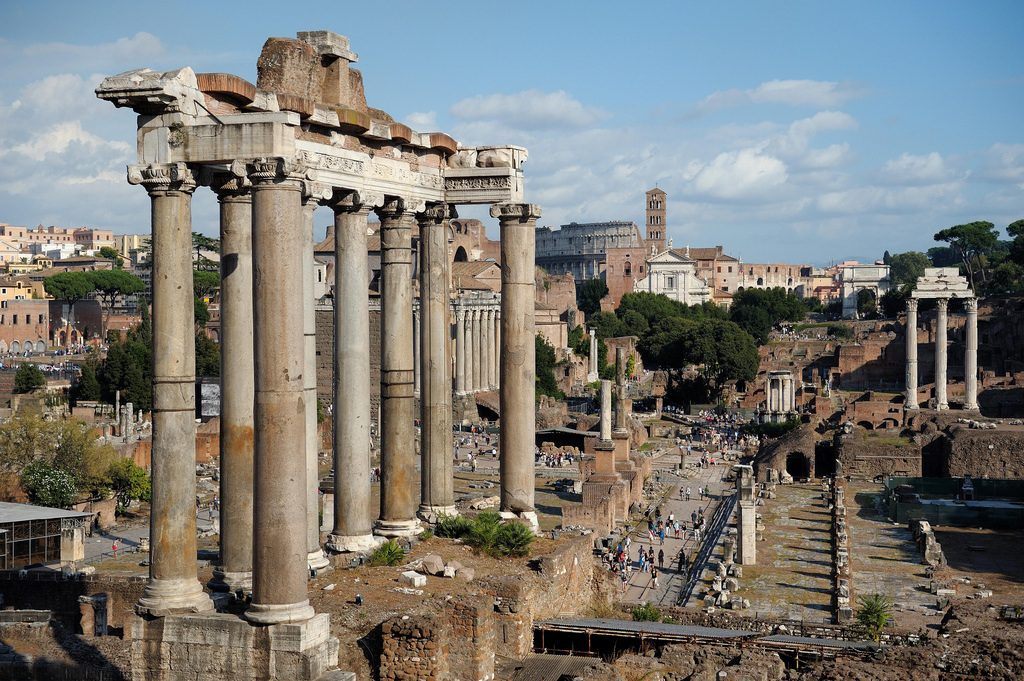
Continue on foot to the Roman Forum to see the Temple of Saturn, the Arch of Titus, and the Via Sacra.
Finish at Palatine Hill's gardens and viewpoints overlooking the Circus Maximus and Forum below.
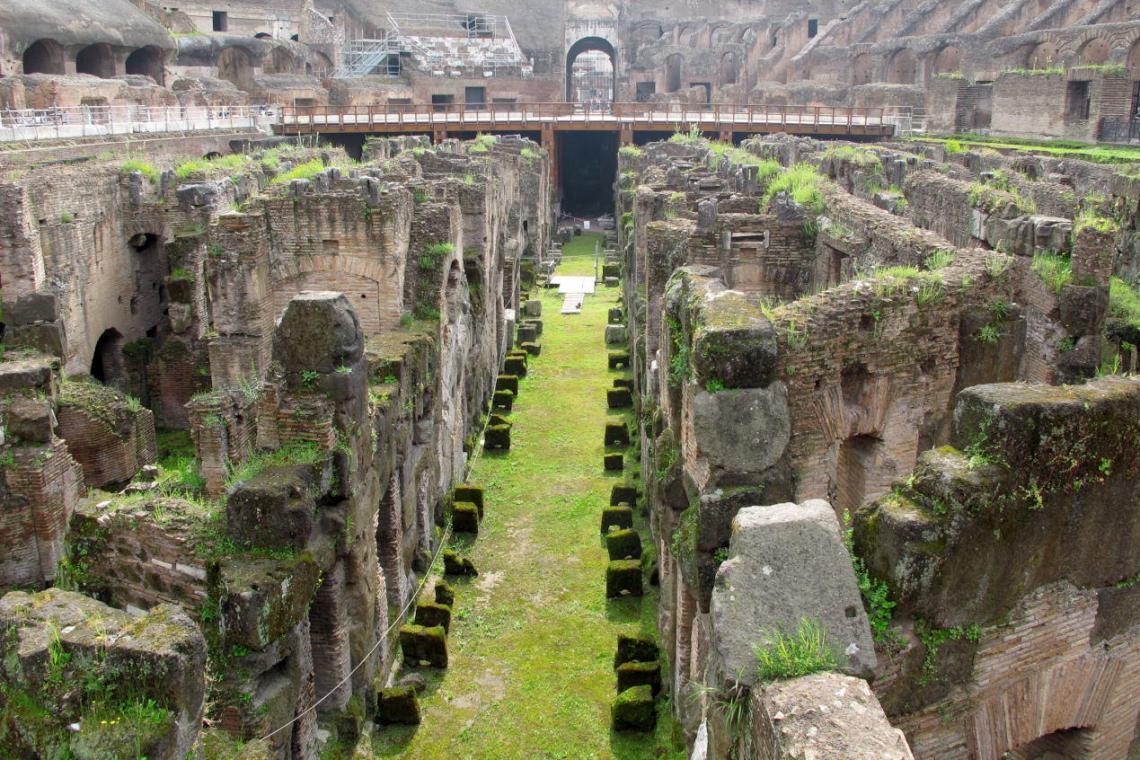
The two-level network of underground corridors beneath the arena floor once housed the pulley systems, animal cages, and holding areas for gladiators before combat. Excavations have identified over 80 vertical shafts that once lifted scenery and animals directly into the arena above.
A partial wooden platform rebuilt over a section of the hypogeum lets visitors stand where gladiators once fought, replicating the sand-covered surface original to the amphitheater. The reconstruction reveals how trapdoors allowed sudden animal or scenery appearances mid-spectacle.
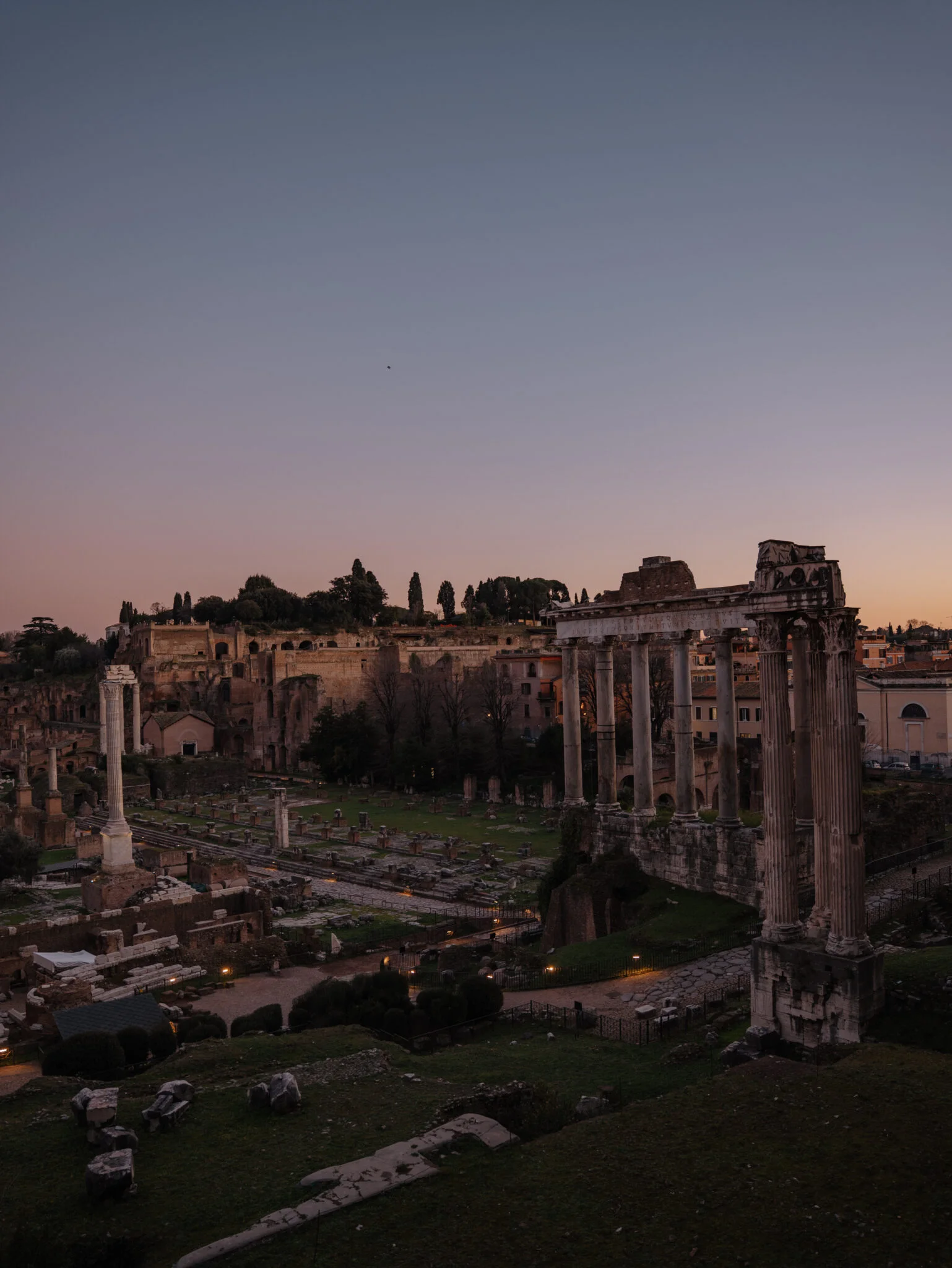
Standing at the western edge of the Roman Forum, this temple's eight surviving granite columns are among the most photographed ruins in Rome, dating in their current form to a rebuilding around 42 BC. It once housed the Roman state treasury within its podium.
This first-century AD triumphal arch marks the highest point of the Via Sacra and commemorates the capture of Jerusalem in 70 AD. Its inner relief panel depicting looted Temple treasures is considered one of the finest surviving examples of Roman narrative sculpture.
The ceremonial main street of ancient Rome runs through the heart of the Forum, once used for triumphal processions from the Capitoline Hill to the Colosseum. Original paving stones, worn smooth by two millennia of foot traffic, remain visible along much of its length.
Traditionally cited as the birthplace of Rome itself, this hill holds the ruins of the Domus Augustana and Domus Flavia, imperial residences built for first-century emperors overlooking the Circus Maximus below. Excavated frescoes and mosaic fragments still cling to portions of the palace walls.
You gather at Piazza del Colosseo, where your guide checks your name against the reserved list and hands out radio headsets before the turnstiles. You step through the numbered arch and descend — the highlight of the underground tour — onto the reconstructed arena floor, standing where gladiators once entered, then down again into the hypogeum. Here you walk the narrow brick passages, pause at the trapdoor shafts, and trace the grooves cut by the lift mechanisms into stone worn smooth by centuries. Back in daylight, you climb to the second tier for the long view across the arena bowl, then exit toward the Forum. You follow the Via Sacra past the Arch of Titus, stopping where your guide points out the Curia, the Temple of Saturn, and the speaker's platform. You feel the gradient change as the path bends upward. Then you ascend Palatine Hill. You pause among the palace foundations, look down over the whole Forum spread below, and let the scale settle. Arriving between 08:30 and 10:00, you moved through the tunnels before the midday heat and the thickest crowds reached the site. Your colosseum underground and roman forum tour ends on the hilltop, headset returned, the city's oldest quarter mapped out beneath your feet — three connected ruins walked in a single unhurried morning.
All the details about your upcoming adventure in one place
The colosseum underground and roman forum tour opens the restricted hypogeum, arena floor, and the ancient civic heart of Rome to visitors led by licensed guides. These guided Rome Colosseum tours trace the gladiator passages beneath the amphitheatre before crossing to the Roman Forum and Palatine Hill, where the ruins of temples, the Via Sacra, and imperial palaces still stand. Booking colosseum underground and roman forum tour tickets secures escorted access to areas the general public cannot enter alone.
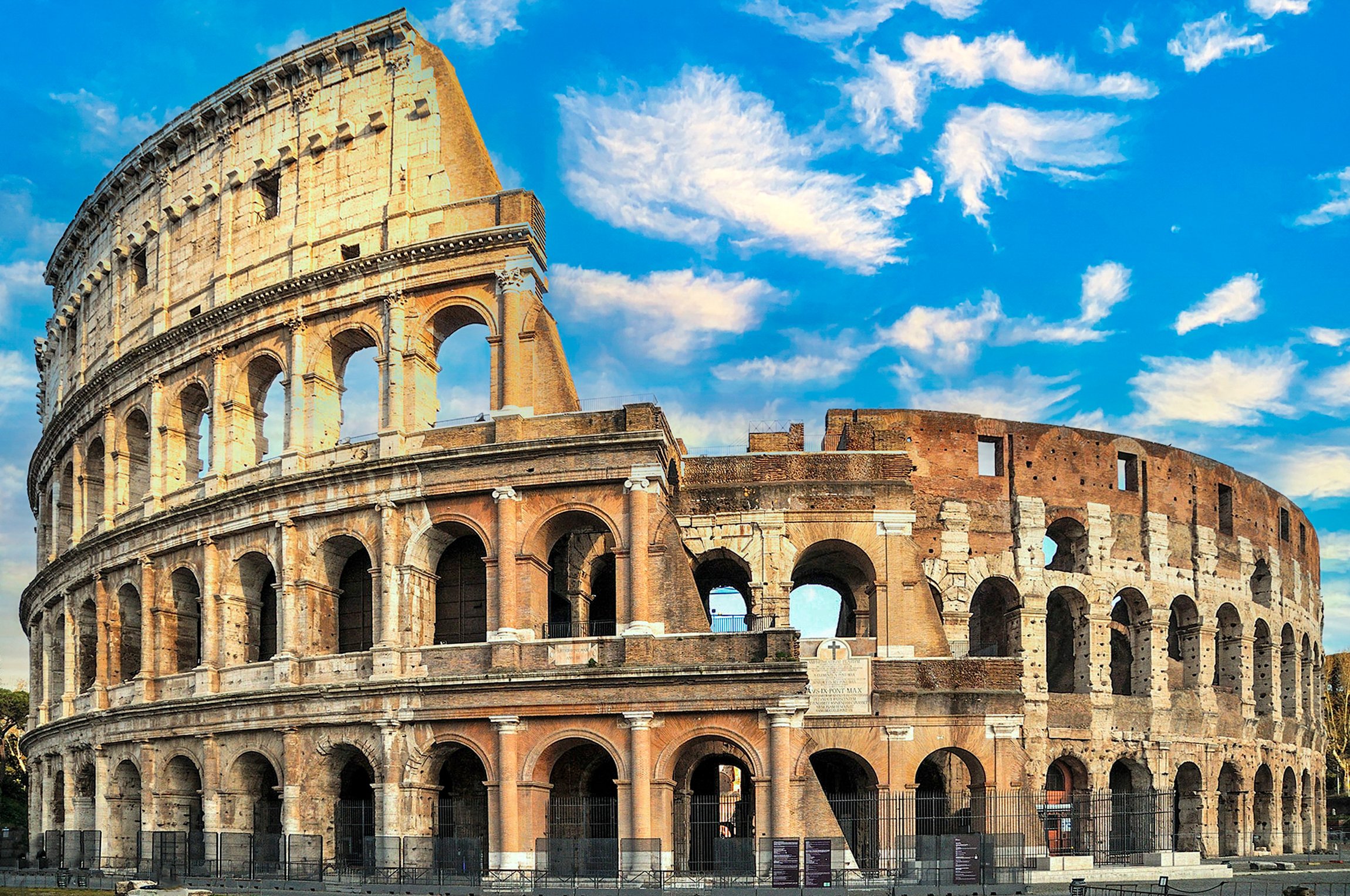
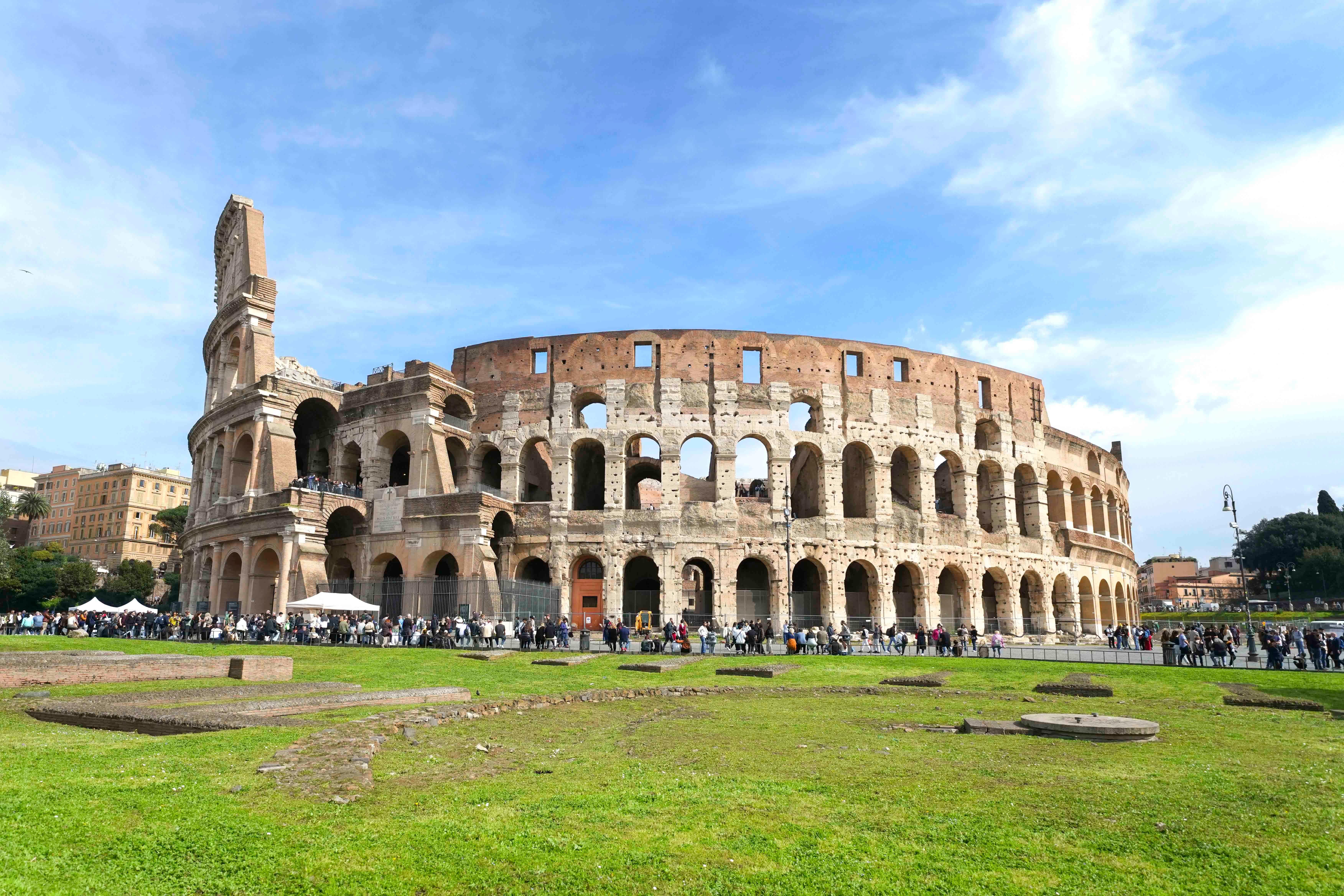
The subterranean corridors of the Colosseum stayed buried under earth and rubble for roughly a thousand years, invisible to the millions who circled the arena above. Only systematic nineteenth-century excavation exposed the hypogeum — the two-level network of tunnels, cells, and lift shafts where gladiators waited and wild animals were held before their releases. A colosseum underground and roman forum tour now threads visitors through this recovered layer, then out across the civic heart of the ancient city. The amphitheatre itself was inaugurated in 80 AD under Emperor Titus, built on the drained lake of Nero's Golden House. Its travertine shell once seated some 50,000 spectators, fed by 80 numbered entrance arches and a retractable awning, the velarium, worked by sailors from the imperial fleet. Below the wooden floor, 28 manually operated hoists lifted caged beasts and scenery into daylight through concealed trapdoors, a hidden machinery of spectacle. Few Roman monuments matter today the way these ruins do, because they compress the mechanics of empire into a single walkable landscape. The Roman Forum, a short stroll northwest, was the political and commercial forum where the Senate met, triumphs processed along the Via Sacra, and orators addressed the crowd from the Rostra. Palatine Hill rises above it, the ridge where Augustus and later emperors built palaces so vast the word "palace" derives from the hill's name. Together the three sites — arena, forum, and hill — form the densest surviving record of classical urban life anywhere. Architecturally, the amphitheatre remains a study in engineering economy: superimposed Doric, Ionic, and Corinthian orders on the exterior, a radial system of vaults and stairways distributing enormous loads and crowds with unusual efficiency. Earthquakes, medieval quarrying, and centuries of neglect stripped much of the outer ring, yet the exposed cross-section reveals the structure's logic more plainly than the intact façade ever could. In the Forum, fragments tell parallel stories — the Arch of Titus, the columns of the Temple of Saturn, the brick core of the Basilica of Maxentius. A guided colosseum underground and roman forum tour connects these fragments into narrative, reading the stones as the Romans built them. This is why colosseum underground and roman forum tour tours remain among the most requested experiences in the city: the underground reveals what the crowds above were never meant to see, and the Roman landmarks beyond it explain why the spectacle existed at all, tracing a UNESCO-listed archaeological continuum from tunnel to summit.
The exposed cross-section reveals the structure's logic more plainly than the intact façade ever could.
Casual, comfortable clothing suits the uneven ancient stone surfaces found throughout the Colosseum, hypogeum, and Roman Forum. Sturdy closed-toe walking shoes are strongly recommended, since the underground passageways and Forum's Sacred Way have loose gravel, steps, and worn marble. There is no strict dress code, but modest clothing is advisable given the site's historic and monumental character.
All visitors pass through airport-style security screening at the Colosseum entrance, with bag checks and metal detectors. Only one small bag or backpack per person is allowed inside (roughly the size of a daypack); larger backpacks, suitcases, and rolling luggage are refused entry with no on-site storage available. The Roman Forum and Palatine Hill, included with the standard 18 EUR ticket, share the same security standards at their separate entrance points.
Personal photography without flash is allowed throughout the Colosseum's arena floor, seating tiers, and the Roman Forum. Inside the hypogeum, guides typically ask visitors to avoid flash and tripods to protect the fragile excavated walls and the experience of other groups moving through the narrow corridors. Tripods, selfie sticks, and professional lighting rigs require separate authorization and are not permitted on standard visits.
Children can join the colosseum underground and roman forum tour, though the hypogeum's low lighting, narrow stone corridors, and stairs are more manageable for kids over roughly 6-7 years old. Strollers cannot be brought into the underground level, so a soft baby carrier is a practical substitute for younger children. The Roman Forum's open-air paths and the Palatine Hill gardens offer easier stretches to let children move around between the more confined underground sections.
The main Colosseum arena level, Roman Forum pathways, and Palatine Hill viewpoints have accessible routes with ramps for wheelchairs and strollers. The underground hypogeum itself is not wheelchair or stroller accessible due to narrow original passageways, uneven excavated floors, and staircases connecting its two levels. Visitors with mobility limitations should plan to join the general Colosseum and Roman Forum route rather than the hypogeum descent.
Eating and drinking are not permitted inside the Colosseum, the hypogeum, or within the Roman Forum and Palatine Hill archaeological areas. Visitors may carry a sealed water bottle, which is important given Rome's summer heat, but food must be consumed outside the ticketed zones. There are no cafés or refreshment stands inside the monument itself.
Moderate crowds, book ahead for underground slots
Busiest midweek, arrive at opening
Heavier weekend crowds begin building
Peak day, arena and underground slots sell out
Opening hours
08:30 – 19:15 daily (last entry 1 hour before closing)
Address
Piazza del Colosseo, 1, 00184 Roma RM, Italy
Wheelchair access
Ground level accessible; hypogeum has stairs and uneven floors, not accessible
Best arrival window
08:30–10:00, entry at opening avoids peak midday crowds and heat
Bag policy
Small bags only; large backpacks and suitcases are not permitted inside
Public transport · 2-5 min from station · €1.50 metro ticket, valid 100 minutes
Take Metro Line B to the Colosseo station, which sits directly beside the site, roughly a 2-minute walk to the entrance.
Walk · 15-20 min · Free
From Piazza Venezia, follow Via dei Fori Imperiali directly toward the amphitheater, passing the Imperial Fora along the way.
Taxi · 10-25 min depending on origin · €10-20 from central Rome
Taxis can drop passengers directly at Piazza del Colosseo, though traffic around the site can slow arrival during peak hours.
Tram · 15-30 min · €1.50 tram ticket, valid 100 minutes
Tram Line 3 stops at Piazza del Colosseo, convenient from Trastevere or the San Giovanni corridor.
Tickets for the colosseum underground and roman forum tour can typically be cancelled up to 24 hours before the scheduled start for a full refund of the 18 EUR standard fee; cancellations made closer to the visit time are generally non-refundable. Rescheduling policies vary by the specific operator or ticket vendor used to book the tour.
Recommended time
3-3.5 hours
A guided colosseum underground and roman forum tour typically runs 3 to 3.5 hours door to door, covering the hypogeum tunnels, arena floor, main tiers, then the Roman Forum and Palatine Hill on foot. Add 20-30 minutes for security screening before your slot and another 15-20 minutes for the walk between the amphitheater and the Forum entrance. Taking the 08:30-10:00 slot keeps the underground portion calm before tour groups stack up, while afternoon departures push guides to compress the Forum segment to stay on schedule. Budget the full half-day if you plan to linger on Palatine Hill afterward rather than treating it as a quick add-on.
Crowd levels through the day
Weather · crowds · average price — dots go green to amber to red as each metric rises.
March and April bring mild temperatures around 15-20°C and blooming greenery on Palatine Hill, though Easter week draws heavy crowds. Booking hypogeum slots two to three weeks ahead is advisable during this period.
June through August is peak season with temperatures often exceeding 32°C and the longest queues of the year; the 08:30–10:00 arrival window becomes especially valuable for avoiding both heat and crowds. Ferragosto (August 15) sees a brief mid-month lull in local visitor numbers.
September and October offer cooler weather around 18-24°C and thinner crowds than summer, making it one of the more comfortable windows for the underground's confined spaces. Early October still carries some residual high-season demand.
November through February has the shortest lines and cool temperatures near 5-12°C, though closing times shift earlier due to shorter daylight hours. The Dec 25 and Jan 1 closures are the only full-day closures of the year.
Hypogeum access is capped in small groups and regularly sells out, especially in summer; reserving two to three weeks in advance secures preferred dates.
The hypogeum's excavated floors and Roman Forum's ancient paving are uneven and occasionally damp, so athletic or hiking-style shoes reduce slip risk.
Security screening turns away large backpacks and suitcases with no cloakroom on site, so pack light before arriving.
Guides and security staff may request photo ID matching the ticket name, particularly for the restricted hypogeum entry.
The underground passageways are tight and shared with other small groups, so flash photography and tripods are typically discouraged to keep the route moving.
Since the ticket bundles the Roman Forum and Palatine Hill, allocate time to walk the Via Sacra and the Palatine gardens rather than only the Colosseum itself.
The site closes only on Dec 25, Jan 1, and May 1, but occasional bad-weather closures of the underground and arena floor can occur without advance notice.
Piazza del Colosseo, 1, 00184 Roma RM, Italy
Group meets near the ticket counters before security screening and hypogeum descent
Get directionsLargo della Salara Vecchia, 5/6, 00186 Roma RM, Italy
Alternate entry point when the tour continues into the Forum and Palatine Hill
Get directionsThe Colosseum opened in 80 AD under Titus. The hypogeum came later. Emperor Domitian ordered its construction around 90 AD, roughly a decade after the amphitheatre's inauguration. This subterranean network transformed the arena floor into a stage served from below. Any visitor drawn to a colosseum underground and roman forum tour walks above the very engine that once drove the spectacles. The hypogeum descended two levels beneath the wooden arena. A grid of brick-and-stone corridors ran along a central passage. Here Domitian's engineers installed a system of eighty vertical shafts. Each shaft held a wooden lift raised by a capstan turned by slaves. Trapdoors above released animals and armed men into the sunlight without warning. Twenty-eight elevators alone hoisted caged beasts toward the arena. Cages, ramps, and holding cells lined the lower gallery. Gladiators waited in one zone; lions, bears, and leopards paced in another. The descriptive form of a rome colosseum tour begins in this darkness, where scenery and combatants were staged unseen. Use of the hypogeum ceased by the sixth century, and centuries of silt buried it entirely. Excavation began in earnest in the nineteenth century, yet the underground remained closed to the public for generations. Only in 2010 did restoration open the hypogeum to guided visits, and in 2021 a new retractable arena floor was announced to cover it once more. Skip-the-line colosseum access now routes small groups through these restored corridors. A well-planned colosseum underground and roman forum tour tour links the subterranean passages to the Palatine Hill and the civic heart of ancient Rome. Booking colosseum underground and roman forum tour tickets grants entry to this lower level plus the surrounding Roman landmarks. The surviving brickwork still shows grooves cut for the lift mechanisms. Many colosseum underground and roman forum tour tours conclude here, among the stone channels that fed the arena. What visitors see today is Domitian's machinery, stripped of its timber, laid bare after seventeen centuries underground.
Titus inaugurates the Colosseum with a hundred days of games above solid ground.
Domitian orders the hypogeum built beneath the arena on two subterranean levels.
Corridors gain eighty shafts, lifts, and trapdoors for animals and gladiators.
The amphitheatre's spectacles end and the hypogeum fills with silt and rubble.
Archaeologists begin clearing the buried underground chambers.
Restoration opens the hypogeum to guided visitors for the first time.
A retractable arena floor is announced to span the excavated hypogeum once more.
There is no food service inside the site itself, so most people planning a colosseum underground and roman forum tour build in a stop on Piazza del Colosseo or the surrounding Monti streets before or after. Options range from grab-and-go pizza al taglio to sit-down trattorias within a five-minute walk of the amphitheater.
Terrace tables sit right on Piazza del Colosseo, so it fills fast at lunch; good for a coffee and pastry break rather than a full sit-down meal before continuing to the Forum.
Casual spot on Via del Colosseo known for its Pizza della Salute; useful for a quick, affordable bite either before entry or after finishing the Palatine Hill leg of Rome's landmarks circuit.
Family-run Roman kitchen serving classic pastas and grilled meats since 1982; better suited to a relaxed post-tour lunch than a rushed stop given table service.
Michelin-starred rooftop restaurant for a special-occasion dinner; reservations essential and not practical for a quick turnaround during a skip-the-line colosseo e foro romano tour day.
Real experiences from real travelers
The colosseum underground and roman forum tour took us into the hypogeum where gladiators once waited, and standing in those brick corridors in the morning cool was the highlight. Our guide from Trieste knew the mechanics of the old lift system and the trap doors. Bring water because the arena gets hot fast once the sun climbs.
We booked the 8am slot and the light coming through the arches was soft and golden before the crowds arrived. Walking the reconstructed arena floor and then down into the tunnels gave a real sense of scale. The Palatine Hill views over the ruins at the end were quieter than I expected.
A rome colosseum tour that includes the underground is the way to go, though July heat on the arena floor was intense by late morning. The hypogeum below stays cooler and shaded. Our small group meant we could actually hear the guide over the noise.
Descending into the hypogeum was atmospheric, all damp brick and narrow passages under the arena. Our guide connected the underground to the Roman Forum walk afterward so the whole city started to make sense. Comfortable shoes are essential over the uneven ancient stone.
The colosseum underground and roman forum tour ran with only ten of us and the guide adapted to our questions. Standing on the arena floor at eye level with the tiered seating, you feel the scale of the roman landmarks around you. We finished on the Via Sacra as the afternoon light turned amber.
Loved how the skip-the-line colosseum entry saved us the long queue in the sun. The underground passages and then the Forum and Palatine Hill together tell one continuous story. Our guide pointed out the Arch of Septimius Severus and the Temple of Saturn on the walk.
We went in November and the Roman Forum was misty and almost empty at opening. The colosseum underground and roman forum tour covered a lot of ground so pace yourself. The reconstructed arena floor and the hypogeum below were the parts everyone photographed.
As a local I still recommend the tour del Colosseo sotterraneo to visitors because the hypogeum is not accessible on standard entry. The brick substructures under the arena floor are extraordinary up close. Ending along the Via Sacra in the Forum ties the ancient roman landmarks together.
Our guide was a working archaeologist and the depth of detail in the underground chambers was excellent. The colosseum underground and roman forum tour tickets included the arena floor and Palatine Hill, which felt generous. Late afternoon light on the Forum columns was gorgeous.
We did the rome colosseum underground tour and covered the hypogeum, arena floor, Forum and Palatine before lunch. The scale of it all under a hot Roman sky stays with you. Loved standing where the gladiators entered the arena.
Everything you need to know for your journey
The site is open daily from 08:30 to 19:15, with last entry one hour before closing; the colosseum underground and roman forum tour follows these same hours since the Forum and Palatine Hill are included on the same ticket.
The main Colosseum, Roman Forum paths, and Palatine Hill have accessible routes, but the hypogeum itself involves stairs and uneven excavated floors and is not wheelchair or stroller accessible.
Large backpacks, suitcases, tripods, selfie sticks, drones, glass containers, and sharp objects are among the items not allowed through security for the colosseum underground and roman forum tour.
Personal photography without flash is generally fine in the hypogeum, though guides often ask visitors to skip flash and tripods to protect the fragile ancient walls and keep narrow corridors moving.
Arriving at opening, between 08:30 and 10:00, avoids peak midday crowds and the day's worst heat, making mornings the most comfortable time for a colosseum underground and roman forum tour.
There's no strict dress code, but sturdy closed-toe shoes are strongly advised given the uneven stone and gravel surfaces throughout the underground and Forum.
Eating and drinking are not permitted inside the Colosseum, hypogeum, or Roman Forum areas, though a sealed water bottle can be carried for the walk.
The Colosseo station on Metro Line B sits about two minutes from the entrance at Piazza del Colosseo, making it the simplest way to reach the meeting point for the tour.
Yes, though the hypogeum's low light, stairs, and narrow passageways are best suited to children over about six or seven years old, with easier open-air stretches available in the Roman Forum.
Tickets are typically refundable in full when cancelled at least 24 hours ahead of the scheduled colosseum underground and roman forum tour, with the standard 18 EUR fee returned; later cancellations are usually non-refundable.
The colosseum underground and roman forum tour naturally combines with the Arch of Constantine, Palatine Hill, the Arch of Titus, and Circus Maximus, all within a short walk of the exit.
The standard ticket for the colosseum underground and roman forum tour is 18 EUR, which includes entry to the Colosseum, Roman Forum, and Palatine Hill.
A well-preserved triumphal arch from 315 AD standing beside the Colosseum, marking the ceremonial route into ancient Rome. Its reliefs combine reused earlier Roman sculpture with commissioned fourth-century work.
The traditional birthplace of Rome, this hill holds the ruins of imperial palaces including the Domus Augustana and offers views over the Circus Maximus. Entry is included with the standard Colosseum ticket.
A first-century arch at the edge of the Roman Forum commemorating the siege of Jerusalem, notable for its interior relief of the captured Temple treasures.
An ancient Roman prison beneath the Church of San Giuseppe dei Falegnami, traditionally linked to the imprisonment of Saints Peter and Paul.
The vast open valley that once hosted Roman chariot races for up to 150,000 spectators, now a public green space with visible track outlines.
A basilica near the Colosseum housing Michelangelo's Moses sculpture, part of Pope Julius II's unfinished tomb project.
A walkable, boutique-hotel-heavy neighborhood just north of the Colosseum known for its narrow streets, small restaurants, and easy access to Via dei Fori Imperiali.
A quieter residential area directly south of the Colosseum offering mid-range guesthouses within a short walk of the site.
A boutique luxury hotel with rooftop views directly overlooking the Colosseum's exterior walls.
A long-established family-run hotel near the Colosseum popular with return visitors for its garden courtyard.
Join thousands of happy travelers who have discovered this incredible experience
Book Your Experience Now