3 hr
Rome Colosseum Underground, Arena & Forum Tour
- Entry ticket
- Mobile voucher
- Valid same day
Colosseum Underground at Night — Official Una Notte al Colosseo Guided Tour
Lamplight on cold stone, two thousand years below.
Compare fares, pick the fit — all bookings are mobile-voucher and eligible for free cancellation where shown.
3 hr
3 hr
2 hr 30 min
Worth it for history-driven first-timers
For 95 EUR, the colosseum underground at night buys you a small-group guided descent into the hypogeum — the tunnels and chambers sealed off from standard day admission. What you actually pay for is access plus atmosphere: the arena floor without the daytime queue, restricted lower-level passages, and a guide who has time for questions because groups stay small. Compared to a bare skip-the-line colosseum entry, you're paying roughly triple, so the maths only works if the hypogeum and the after-dark quiet matter to you. History buffs, photographers, and repeat visitors who already know the standard route get real value from these colosseum underground at night tours. If you mainly want a fast photo of one of Rome's landmarks, the premium is hard to justify. Book the official night underground tour directly through colosseo.it rather than resellers to avoid inflated markups on top of the fee.
Bottom line: If the underground and the after-dark calm are the draw, the colosseum underground at night tickets earn their premium; if you only want a quick landmark photo, skip it.
Both reach the hypogeum, but a colosseum underground at night visit trades crowds for atmosphere while the daytime standard tour trades atmosphere for daylight views of the Forum and Palatine Hill.
|
Top pick Underground at Night |
Daytime Underground/Standard Tour | |
|---|---|---|
| What you see | Hypogeum tunnels, arena floor, spot-lit ruins | Hypogeum, arena floor, Forum, Palatine Hill |
| Crowd levels | Small guided group, no daytime queues | Peak-hour crowds, shared walkways |
| Atmosphere and lighting | Torch-style lighting, quiet and eerie | Bright daylight, busy narration |
| Comfort (heat/weather) | Cooler evening air, less sun exposure | Summer heat, direct sun on upper tiers |
| Duration | Roughly 2 hours, hourly departures | 2.5–3 hours including Forum/Palatine |
| Price | 95 EUR per person | 63–89 EUR per person (varies by operator) |
| See tickets & prices |
Verdict: Choose the night tour for a quieter, more atmospheric hypogeum experience, and the daytime tour if you also want Forum and Palatine Hill access in the same visit.
Hand-picked experiences loved by thousands of travelers
3 – 3.5 hours
Free Cancellation
Explore the Colosseum's secret underground, arena floor, and Roman Forum with a dedicated private guide.
2.5 – 3 hours
Walk the gladiator's path through Rome's most legendary ancient sites in one epic 3-hour journey.
3 hours
Step onto the gladiator floor and explore Ancient Rome's greatest sites in just 3 hours.
Check in with ID and ticket confirmation before your group's scheduled departure time
Pass through bag inspection and metal detector at the designated entry point
Guide introduces the history of the arena floor and spectator levels
Walk the underground corridors where gladiators and animals once waited
Ascend for a nighttime view over the illuminated arena
Guide wraps up near the exit with time for final photos
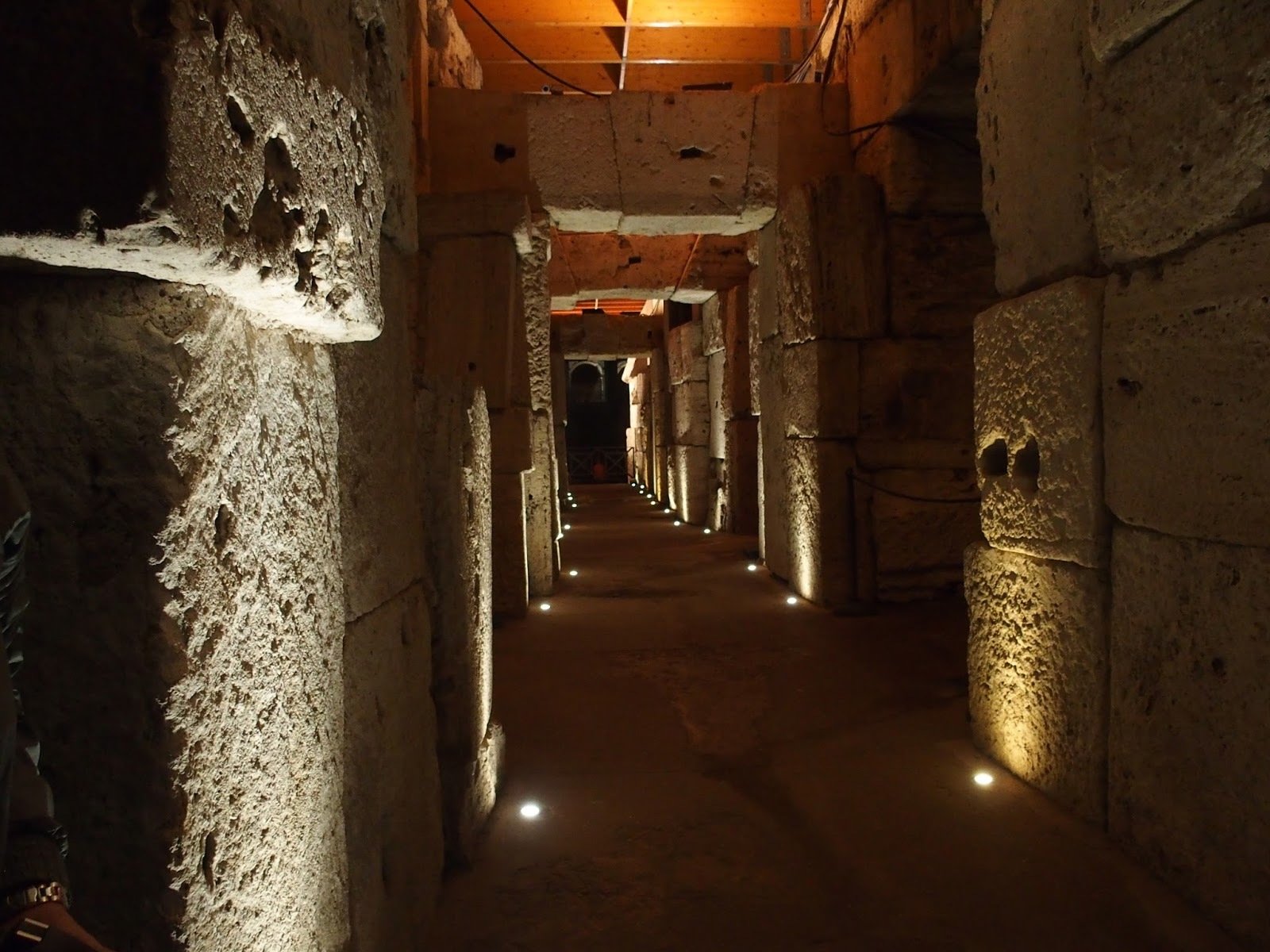
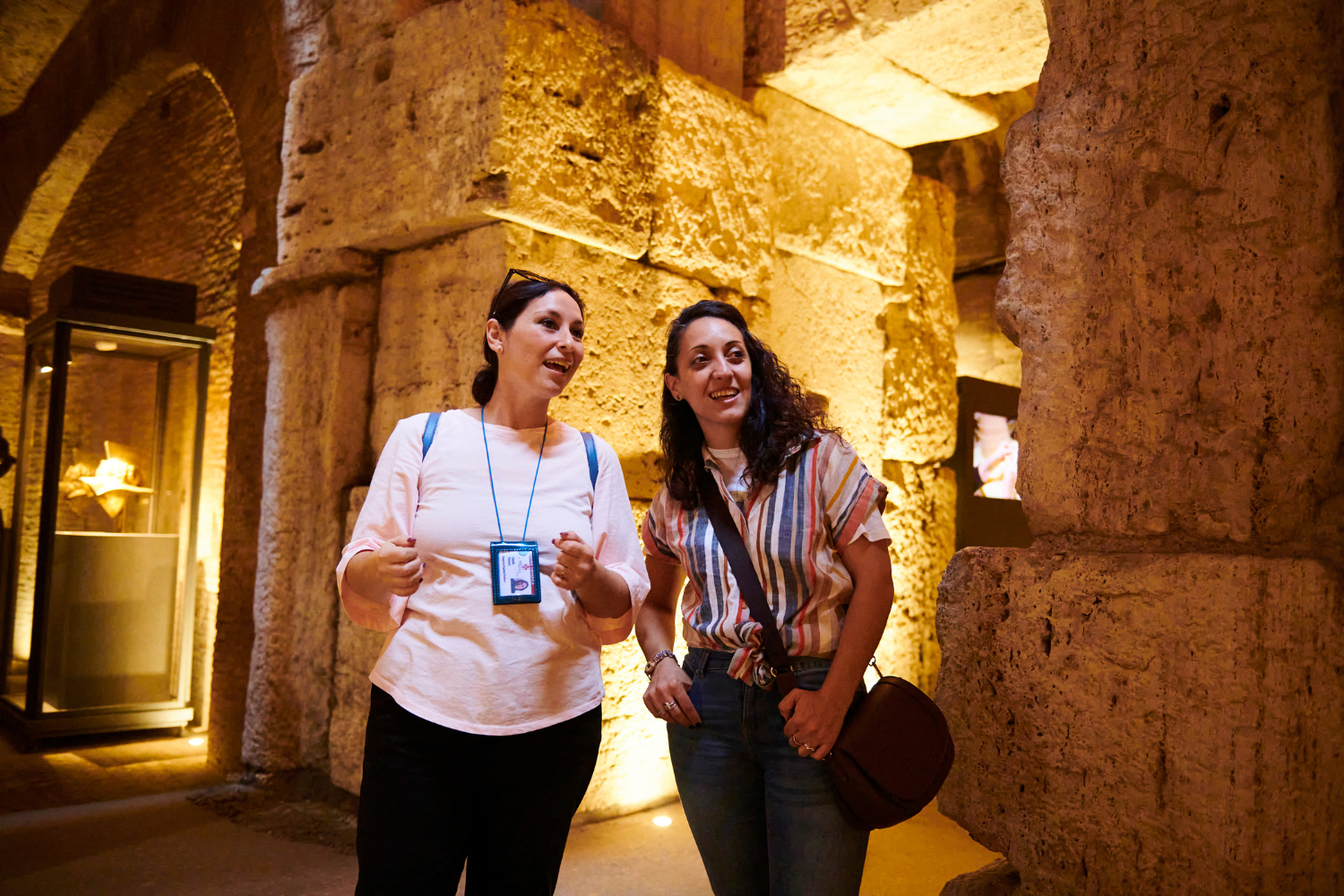
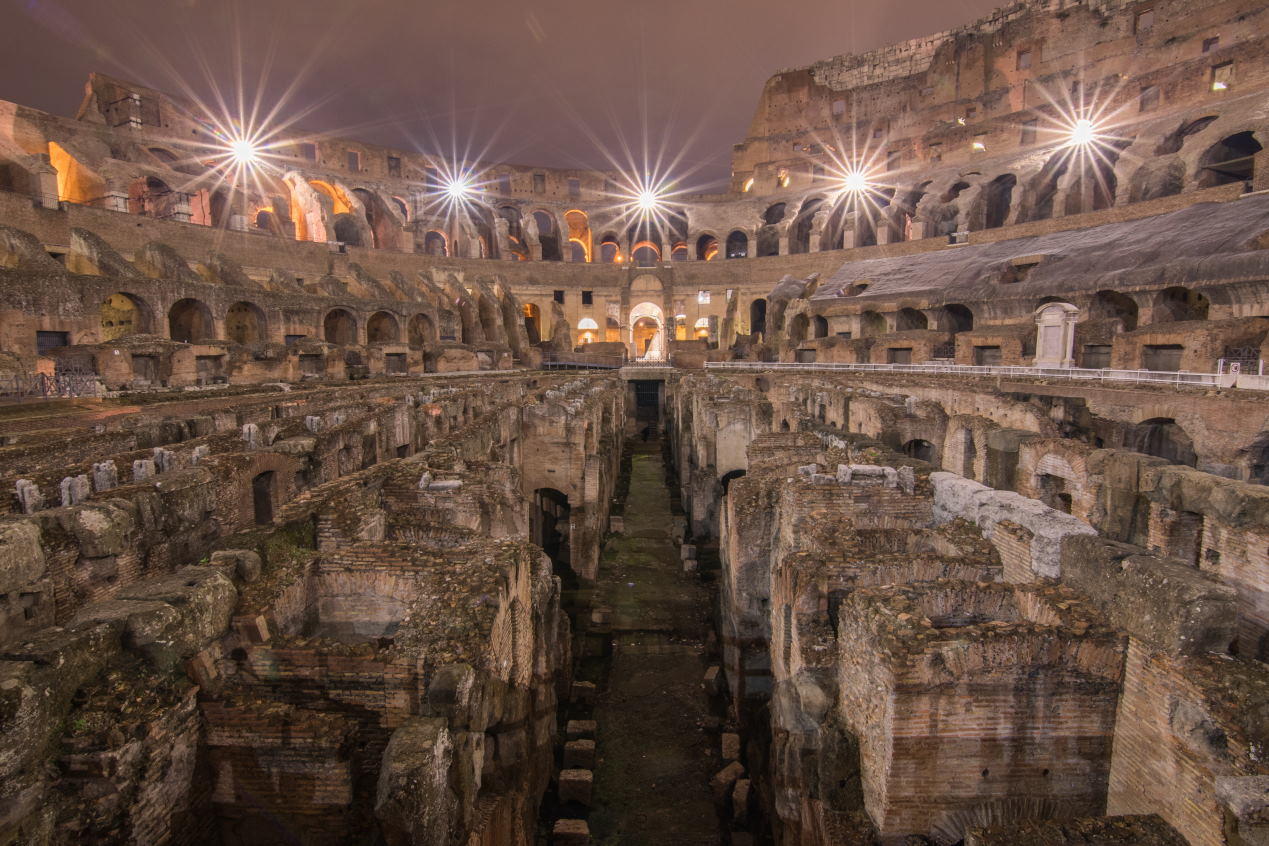
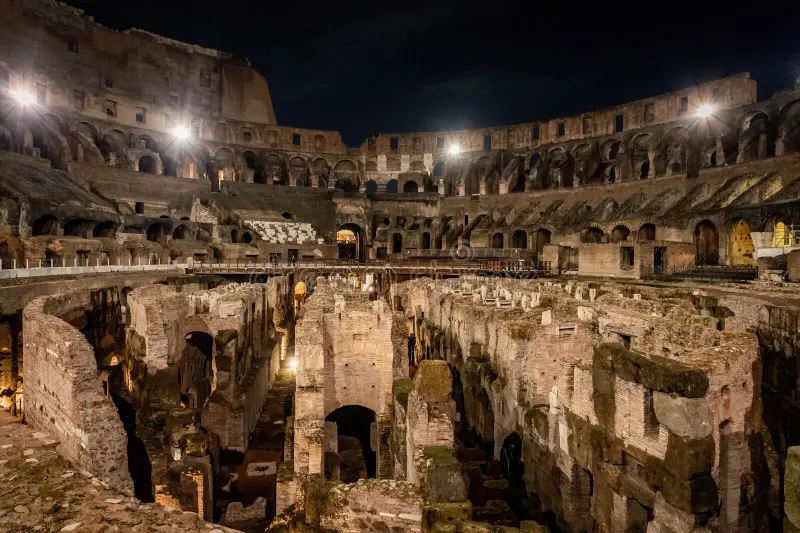
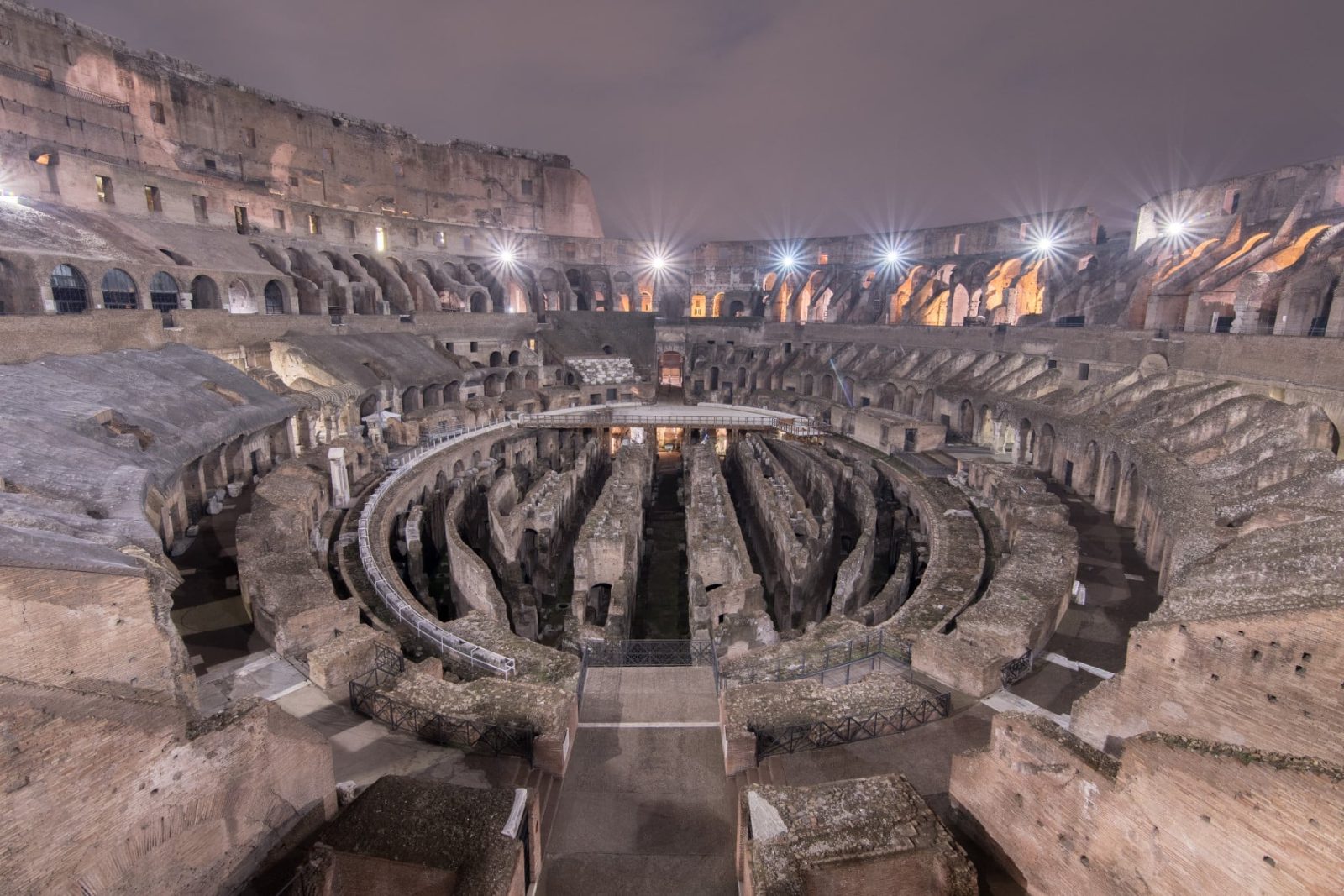
The two-level network of underground passageways once housed animal cages, gladiator holding areas, and 80 vertical shaft-and-pulley systems used to hoist scenery and fighters up to the arena floor. Walking it after dark, lit by low ambient lighting, reveals the mechanical complexity behind ancient spectacles.
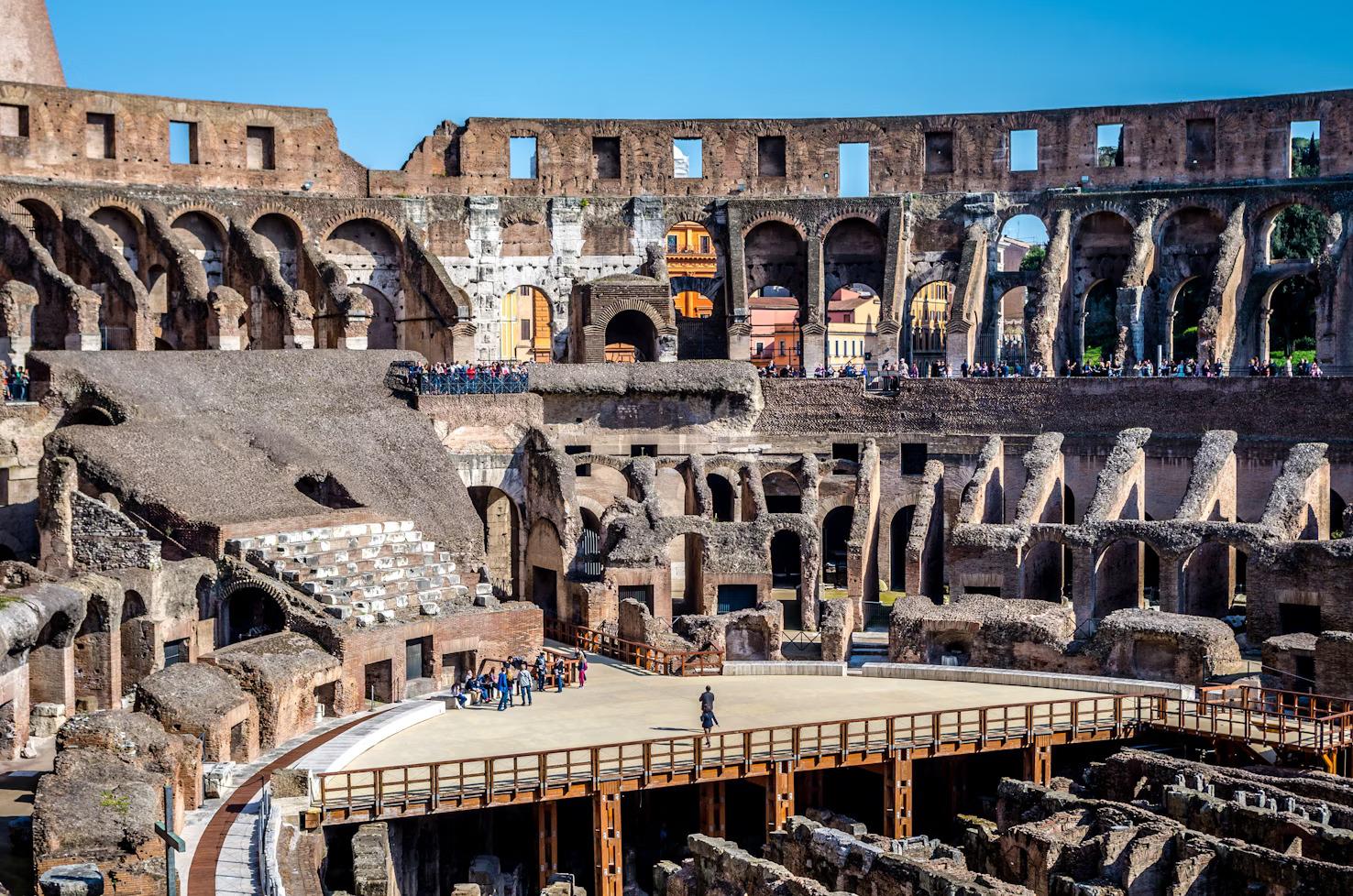
A partial wooden platform rebuilt over a section of the original arena, showing visitors roughly where sand once covered the boards above the hypogeum. Standing here at night offers a rare perspective of the amphitheater's full three-tier seating rising into darkness.
One of the underground chambers where gladiators reportedly gathered before entering the arena, now highlighted with a multimedia projection depicting their movement toward the fighting floor. The chamber's confined stone walls give a sense of the psychological pressure fighters faced before combat.
A wider underground space believed to have been used for coordinating the elevator systems and staging larger set pieces or animals before a show. The moonlit walkway leading to it forms one of the tour's final underground stretches.
The staircase ascending from the underground level back toward the upper tiers, passing beneath what was once a ceremonial gate used for imperial processions. Climbing it at night marks the transition from the hypogeum back into the open-air amphitheater.
A projected artwork displayed near the tour's conclusion, referencing depictions tied to the Colosseum's later historical use and symbolism. It closes the underground portion of the visit with a striking visual counterpoint to the ancient stonework surrounding it.
You arrive at Piazza del Colosseo 1 between 20:00 and 20:30, before your group departs on the hour, and the crowds of the day have already thinned. You collect your mobile voucher, meet your guide, and pass the outer arcade where the floodlights throw long shadows up the travertine. You skip the general queue and step through a gate most visitors never use. You descend to the arena level first, standing where the wooden floor once stretched, then follow the guide down into the hypogeum itself. You walk the central corridor in low light, your footsteps loud in the stone channels. You pause at a hoist shaft, where a lift once carried a leopard upward through a trapdoor, and you trace with your eyes the grooves worn by ropes and capstans. You feel the temperature drop the deeper you go. You climb back toward the tiered seating as the tour continues, looking out across the arena to the Arch of Constantine framed in the arches. On a colosseum underground at night visit the silence does the work that a daytime guide has to shout over. You linger at the upper level, the city glittering beyond the ring of stone. By 24:00 the last group has cleared the gates. You leave through the same arch you entered, the lit façade behind you, and the metro and the piazza cafés a short walk on. The whole descent has taken you somewhere the ruins rarely allow: underneath the spectacle, into its working dark.
All the details about your upcoming adventure in one place
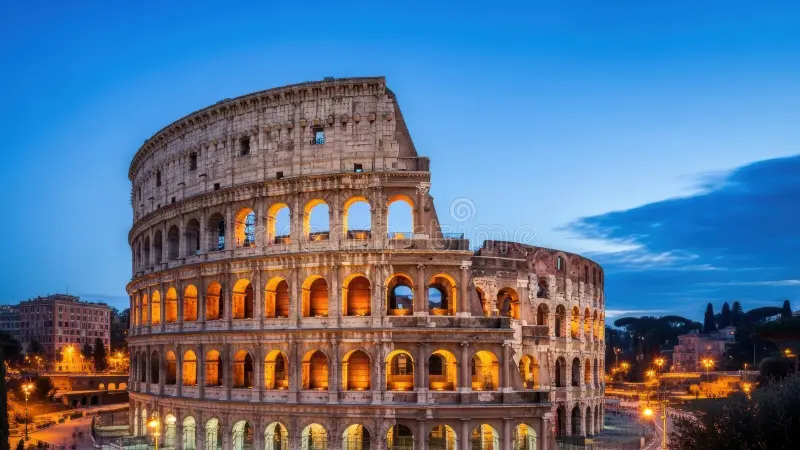
Stepping into the colosseum underground at night gives you access to the hypogeum's stone corridors after the daytime crowds have gone, with the amphitheater's tiers lit against the dark sky. Guided colosseum underground at night tours lead small groups through the restored gladiator passages and onto the reconstructed arena floor, where an expert narrates the Flavian Amphitheatre's role in ancient Roman spectacle. A visit to this UNESCO World Heritage landmark pairs the quiet of the evening with rare entry to sections closed on standard tickets.
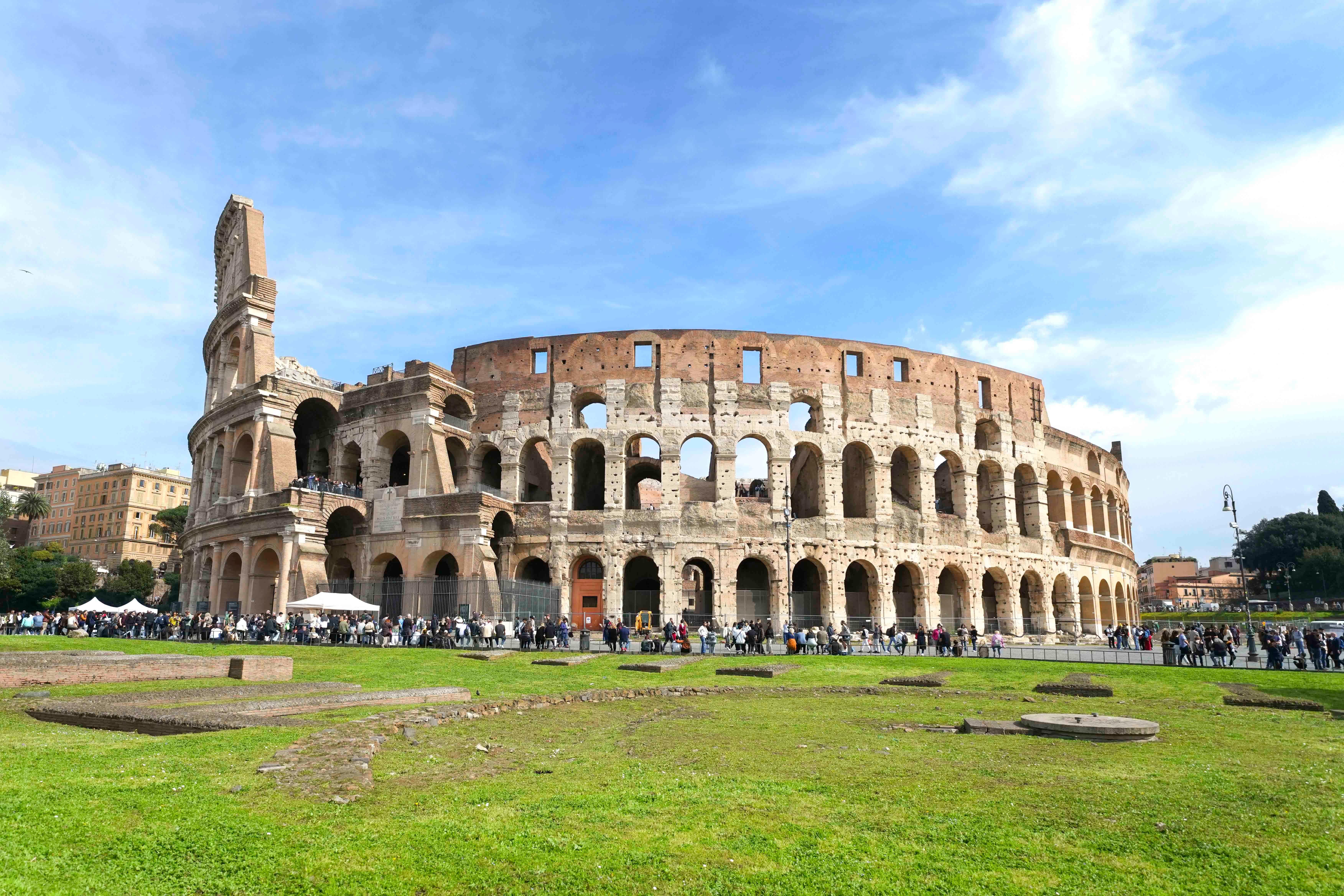
The Colosseum's underground was buried beneath sand and rubble for centuries, and only the excavations of the 1810s and the modern campaigns of the twentieth century returned the hypogeum to view. Emperor Vespasian began the amphitheatre around 72 AD, and his son Titus inaugurated it in 80 AD; the subterranean level came later, likely under Domitian, when the arena floor was raised over a warren of tunnels. That two-storey network of brick-and-tufa corridors is the reason the colosseum underground at night holds a particular gravity, for it was the hidden machinery of Rome's most public spectacle. The hypogeum measures roughly six metres deep and once ran beneath the entire elliptical floor. Thirty-two animal pens, hoist shafts, and counterweighted lifts operated here, raising beasts and scenery through trapdoors into the light of the arena above. Grooves worn into travertine thresholds still mark where capstans turned. The Latin word arena means sand, and the sand that gave the floor its name also absorbed what the crowds came to see. Below it, in the dark, slaves and stagehands worked the ropes. What makes the site matter today is not only its scale but its legibility. Few ancient structures let a visitor read their engineering so plainly. The passages of substructure, the sequence of gates, the alignment of the lift shafts with the seating tiers overhead — all of it survives as evidence rather than reconstruction. A rome colosseum hypogeum tour walks ground closed to general admission for most of the amphitheatre's modern history, opened only in recent decades to guided groups. Architecturally, the amphitheatre is a study in Roman order. Its façade once rose in three arcaded tiers of Doric, Ionic, and Corinthian half-columns, crowned by a Corinthian attic, and its eighty entrance arches distributed some fifty thousand spectators with an efficiency modern stadiums still study. The velarium, a vast retractable awning, was rigged by sailors from the imperial fleet. The travertine came from quarries at Tivoli, hauled along a purpose-built road. Iron clamps once bound the blocks; their removal in later centuries left the pockmarks visible across the outer ring. By evening the monument shifts register. The Rome landmarks that ring it — the Arch of Constantine, the Roman Forum, the Palatine Hill — fall quiet, and the colosseum underground at night becomes a chamber of shadow and echo rather than a daytime thoroughfare. Guided colosseum underground at night tours descend when the day crowds have gone, and the hypogeum, lit low, returns to something closer to the darkness it was built to keep. UNESCO inscribed the historic centre of Rome in 1980, and this amphitheatre remains its most recognised silhouette, a survivor of earthquake, quarrying, and time.
Below the sand that gave the arena its name, slaves and stagehands worked the ropes in the dark.
Flat, closed-toe shoes with good grip are essential for the wooden walkways and uneven stone underfoot in the hypogeum corridors. Evenings in Rome cool noticeably after sunset, so a light jacket is worth carrying even in summer months. Avoid sandals or heels, since the colosseum underground at night route includes narrow stairways and dim lighting.
All visitors pass through an airport-style security check at the entrance, and only small bags or backpacks are permitted inside. Lockers are not typically available on site, so travel light for the evening visit. Staff may ask to inspect bag contents before allowing entry to the underground route.
Handheld photography without flash is permitted throughout the arena floor and underground passageways. Flash photography is discouraged because it disturbs other visitors moving through the narrow corridors in low light. Tripods and selfie sticks are generally not practical given the tour's fixed pace and confined walkways.
Children are welcome on the tour, though the uneven terrain and low lighting make it better suited to those who can walk steadily on their own for roughly an hour.
The underground hypogeum route involves stairs, wooden walkways, and uneven ancient stone surfaces that are not wheelchair accessible. Visitors with mobility limitations should contact the operator in advance at +39 06 39967700 to discuss alternative arrangements, since the evening route differs from the standard daytime accessible path.
Food and drink are not permitted inside the monument during the guided night visit, apart from a small bottle of water. Eating or snacking along the underground corridors or arena floor is not allowed, and there are no food vendors inside the site itself.
Smaller groups midweek
Busiest evening of the week
Book well ahead
Tour hours
20:00–24:00 nightly, tour groups depart on the hour;location
Public transport · 10–20 min from central Rome · 1.50 EUR single metro/bus ticket
Take Metro Line B to the Colosseo stop, which sits directly across from the main entrance on Piazza del Colosseo. Tram line 3 and bus lines 51, 75, and 85 also stop within a short walk.
Walk · 10–15 min from Piazza Venezia · Free
From Roman Forum or Monti neighborhood, it's a flat, well-lit walk along Via dei Fori Imperiali.
Taxi · 10–25 min depending on origin · 10–20 EUR within central Rome
Taxis can drop off directly on Piazza del Colosseo, though evening traffic around the area can add time.
Car · Varies · 20+ EUR for nearby garage parking
Driving is discouraged due to limited parking and restricted traffic zones near the monument.
Tickets for the guided night tour, priced at 95 EUR per person, are non-refundable once booked, though most bookings can be rescheduled to another available date if changed at least 48 hours in advance. Check the confirmation email from the official operator for the exact rebooking window tied to your specific date.
Recommended time
1.5-2 hours
Departures run hourly across the 20:00-24:00 window, with each guided group moving through the hypogeum and arena level in roughly 75-90 minutes before the next slot begins. Arriving during the 20:00-20:30 window keeps you ahead of the pace and avoids feeling rushed at check-in. Add 20-30 minutes if you plan to linger near the arena floor for photos, and subtract little else since the route itself is fixed. Queueing is minimal compared with daytime visits, but groups still stagger at security, so budget a few extra minutes before your scheduled departure.
Crowd levels through the day
Weather · crowds · average price — dots go green to amber to red as each metric rises.
Mild evening temperatures around 15–20°C make the outdoor arena floor portion comfortable. Crowds are lighter than peak summer, and clearer skies improve nighttime photography of the illuminated structure.
Warm nights make the 20:00 start pleasant despite daytime heat, though this is the busiest season for booking availability. Rome's Estate Romana cultural festival runs through summer, adding extra evening activity around the historic center.
Comfortable temperatures and fewer tourists make September and October a favorable window for visiting. Evenings cool quickly after dark, so a jacket becomes more necessary later in the season.
Cold, sometimes damp evenings mean the smallest crowds of the year but chillier conditions inside the unheated underground corridors. Layered clothing is recommended given the near-freezing nighttime temperatures in January.
Tickets are released a limited number of days ahead on the official site, and summer dates sell out quickly given the small group sizes.
The exact meeting point and check-in instructions arrive by email after booking and should be reviewed the day before.
Security staff may check identification against the name on your ticket before allowing entry.
Even in summer, Roman evenings cool down, and the underground corridors stay cooler than the open arena floor.
The hypogeum's wooden walkways and ancient stone floors are uneven, so a steady pace matters more than rushing ahead.
You'll want your phone for the digital ticket and photos, but ringers should stay off during the guide's narration.
Piazza del Colosseo 1, 00184 Roma RM, Italy
Check in 20–30 minutes before your group's start time
Get directionsThe chambers beneath the arena floor were not part of the original design. When Vespasian began the amphitheatre around 72 AD, the arena stood on level ground. Domitian, who reigned from 81 to 96 AD, commissioned the hypogeum. His engineers excavated a two-level warren of brick and tufa corridors directly under the sand. This is the terrain a visitor on a colosseum underground at night tour now traverses. The hypogeum functioned as backstage machinery. Sixty vertical shafts held wooden lifts, hauled by capstans and counterweights operated by teams below. Trapdoors in the arena floor sprang open on cue. Wild animals, caged in the lower passages, rose into daylight through these hatches. Gladiators waited in flanking corridors before entering through ramps. The Ludus Magnus, the largest gladiatorial school, connected to the complex by an underground tunnel, sparing fighters the crowds above. A separate passage, later named the Passage of Commodus, allowed the emperor discreet entry. Rainwater and drainage channels threaded the same substructure, a hydraulic feat matching the Roman landmarks of the imperial capital. The substructure endured heavy use. Around 217 AD lightning sparked a fire that damaged the upper tiers; repairs continued into the reign of Alexander Severus. After the last recorded games in the sixth century, the hypogeum was abandoned. Silt, debris, and centuries of neglect buried the corridors entirely. By the medieval era earth filled the chambers, and gardens grew over the vanished machinery. The evening illumination of a colosseum underground at night tickets experience reveals brickwork that lay unseen for over a millennium. Systematic excavation came late. Archaeologists under the direction of Pietro Rosa and later Guido Calza cleared the fill through the nineteenth century, and by 1874 the labyrinth stood exposed again. Twentieth-century campaigns stabilised the walls and traced the lift shafts. Restoration between 2018 and 2021 reopened sections to guided access. What survives today is worn tufa, socket holes for the hoists, and the ghost of a stage that never rested. Those joining colosseum underground at night tours walk the service level of an engineering marvel, closer to the arena floor than any spectator of antiquity ever stood, tracing Domitian's design through the quiet of a colosseum underground at night visit.
Vespasian began construction of the amphitheatre on level ground without a substructure.
Domitian commissioned the two-level hypogeum of corridors, shafts, and cages beneath the arena.
A fire, reportedly sparked by lightning, damaged the upper structure and prompted lengthy repairs.
The last recorded spectacles ended, and the underground chambers fell into disuse.
Silt and debris buried the hypogeum entirely, with gardens covering the site above.
Nineteenth-century excavations under Pietro Rosa fully re-exposed the labyrinth.
A restoration campaign stabilised the walls and reopened sections for guided access.
A colosseum underground at night visit runs later than a typical family outing, and the dim tunnels and uneven stone floors mean kids need steady footing rather than a stroller ride. With a small group and a fixed 20:00–24:00 slot, plan around bedtime and pack for a slower, story-driven pace rather than a running-around visit.
Guides generally find children from about 7 upward get the most out of the storytelling, since the hypogeum tour relies on narration in low light rather than hands-on activities. Younger kids can still come but may lose interest during longer explanations at each stop.
Groups move on a fixed schedule departing on the hour, so there is little room to slow down for tired legs once inside. Build in a rest and a snack before arriving so children aren't running low on energy mid-tour.
The underground passages have uneven ancient stone and low lighting, so closed, comfortable shoes matter more here than on a daytime Rome landmarks tour. Sandals or slippery soles make the descent harder to manage with a child in tow.
Because entry falls within the 20:00–24:00 window, this suits families with kids used to later evenings more than those with strict early bedtimes. Arriving in the 20:00–20:30 window before the group departs avoids a rushed catch-up in the dark.
A few gladiator facts prepped in advance help younger children follow the guide's stories underground rather than growing restless. Bring a small flashlight or let them use a phone light responsibly for extra engagement in the dim tunnels.
There is no dining inside the underground chambers, so plan your meal beforehand on the streets surrounding Piazza del Colosseo, since a 20:00 start for colosseum underground at night leaves a tight window if you arrive last-minute.
Faces Piazza del Colosseo itself, so it is the most convenient pick before a skip-the-line Colosseum tour. Go for classic carbonara or pizza; tables fill fast from 19:30 as groups rush to make their colosseum underground at night tour.
Vaulted ceilings and checked tablecloths on Via delle Terme di Tito. Solid amatriciana and grilled meats; a relaxed sit-down option if you have booked colosseum underground at night tickets with time to spare.
Long-running family spot near Via Terme di Tito with pasta, seafood and tiramisu. Good for a quicker dinner before joining colosseum underground at night tours without cutting it too close.
Atop Palazzo Manfredi with a direct amphitheatre view. Reserve well ahead; better suited to an early, unhurried dinner than a rushed pre-tour bite.
Real experiences from real travelers
Booking the colosseum underground at night was the right call for the July heat, since we walked the hypogeum after the crowds thinned and the air finally cooled. Standing in the passages where the lifts once hauled up animals gave the whole place a weight the daytime crush never does. Our guide pointed out the grooves worn into the tufa by the pulley mechanisms.
The visita subterránea al Coliseo de noche felt intimate because our group was capped small and the lighting on the arches was warm rather than harsh. You descend into the substructure and suddenly grasp how the elevators and trapdoors fed the arena floor above. Bring a light jacket, the tunnels stay cool.
We joined a colosseum underground at night tour after a long day and the calm was welcome. The reconstructed section of the arena floor gives you a clear sense of the scale, and the amphitheatre lit from below is a different animal than the postcard view. One star off only because the entrance queue for the timed slot took longer than expected.
Walking the hypogeum corridors just after sunset, with the travertine still holding the day's warmth, was the highlight of our Rome landmarks week. The guide explained how the gladiators and beasts were staged out of sight below. Skip-the-line entry meant we went straight down while the plaza above was still busy.
Our colosseum underground at night tickets included the arena floor and the upper tiers, so we saw the amphitheatre from three levels in one evening. The substructure smells of old stone and damp brick, and the low amber light made the vaults feel enormous. Comfortable shoes are a must on the uneven surfaces.
As a Roman I had never done the hypogeum after dark and it changed how I see the monument. The colosseum underground at night keeps the groups small and the guides genuinely knowledgeable about the pulley systems and cages. Go on a clear evening for the best view up through the arena floor.
We visited in February so the underground passages were properly chilly, but the emptiness more than made up for it. Seeing the tufa walls and the trapdoor reconstructions with almost no one else around felt rare. A Rome Colosseum tour at this hour is slower paced, which suited us.
The most memorable part of the colosseum underground at night tours was standing where the animal lifts once rose into the arena. Our guide timed the walk so we reached the upper level as the exterior arches lit up gold against the sky. Practical note: there is a fair amount of walking and a few tight staircases.
Late January meant we nearly had the substructure to ourselves, and the guide lingered longer at each chamber than a daytime slot would allow. The evening illumination on the amphitheatre and the quiet of the tunnels justified the extra cost. Wear layers and steady footwear.
The colosseum underground at night gave us the hypogeum, the arena floor and a view of the tiered arches without the midday sun beating down. It runs longer than a standard visit so pace yourself. The restored trapdoors and the worn stone grooves stuck with me most.
Everything you need to know for your journey
The colosseum underground at night tour runs nightly from 20:00 to 24:00, with tour groups departing on the hour throughout the evening.
The underground hypogeum route includes stairs and uneven ancient walkways that are not wheelchair accessible, so visitors with mobility needs should call +39 06 39967700 in advance to discuss options.
Bring a valid photo ID and your ticket confirmation; large backpacks, tripods, glass containers, and alcohol are among the items not permitted inside.
Yes, handheld photography without flash is allowed throughout the arena floor and underground corridors during the colosseum underground at night tour.
Booking as early as possible is recommended, since tickets for this Rome Colosseum tour are released a limited number of days ahead and summer evenings sell out fast.
Wear closed-toe, flat shoes with good grip, since the hypogeum's wooden walkways and stone floors are uneven and dimly lit.
Food isn't permitted inside the monument, though a small bottle of water is generally allowed during the visit.
Take Metro Line B to the Colosseo stop, directly across from the entrance at Piazza del Colosseo 1, or use tram line 3 or nearby bus routes.
Children can join the tour, though the low lighting and uneven terrain suit kids who can walk steadily for about an hour.
The 95 EUR per-person ticket is generally non-refundable, though rebooking to another date may be possible if requested well in advance.
The Arch of Constantine and Roman Forum sit within a few minutes' walk and pair naturally with an evening at the Colosseum.
Yes, the guided night visit includes skip-the-line entry, so ticket holders bypass the general daytime queue.
A well-preserved triumphal arch standing beside the Colosseum, built to commemorate a 4th-century imperial victory. Its reliefs mix reused older sculptures with newer Constantinian-era carving.
The sprawling complex of ruined government buildings, temples, and public spaces that once formed the civic heart of ancient Rome. Sections remain illuminated and visible from outside after dark.
One of Rome's seven hills, overlooking the Circus Maximus and offering views across the Forum ruins. It's traditionally linked to the legendary founding of the city.
The excavated remains of Emperor Nero's opulent palace complex, partially open for scheduled visits.
The vast ancient chariot-racing track, now an open green space, that once held tens of thousands of spectators.
A walkable neighborhood of narrow streets, cafes, and boutique hotels just north of the Colosseum.
A quieter residential area bordering the Colosseum with several mid-range hotels.
An upscale hotel with rooftop views directly overlooking the Colosseum.
A long-established family-run hotel a short walk from the monument.
Join thousands of happy travelers who have discovered this incredible experience
Book Your Experience Now